
Opinion
'Racist and Proud': Neo-Nazi Scenes Shock Australia
When neo-Nazis led the March for Australia, the line between fringe and mainstream blurred. What that rehearsal of hate could mean for the nation.

Chairman, Anti-Defamation Commission
Listen to this column 4:30 · AI narration
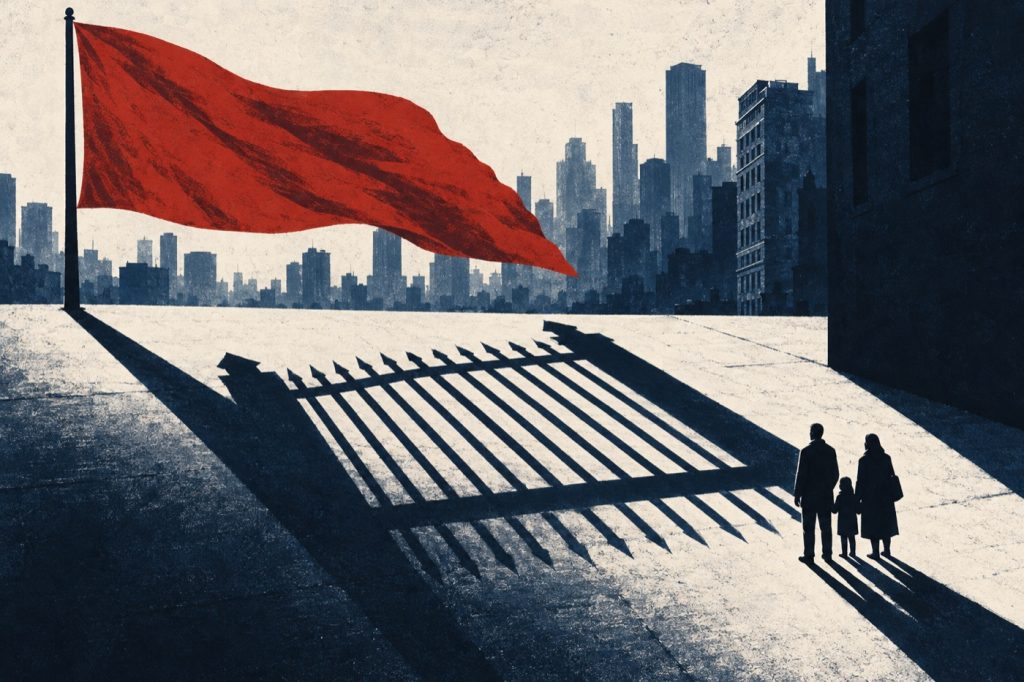
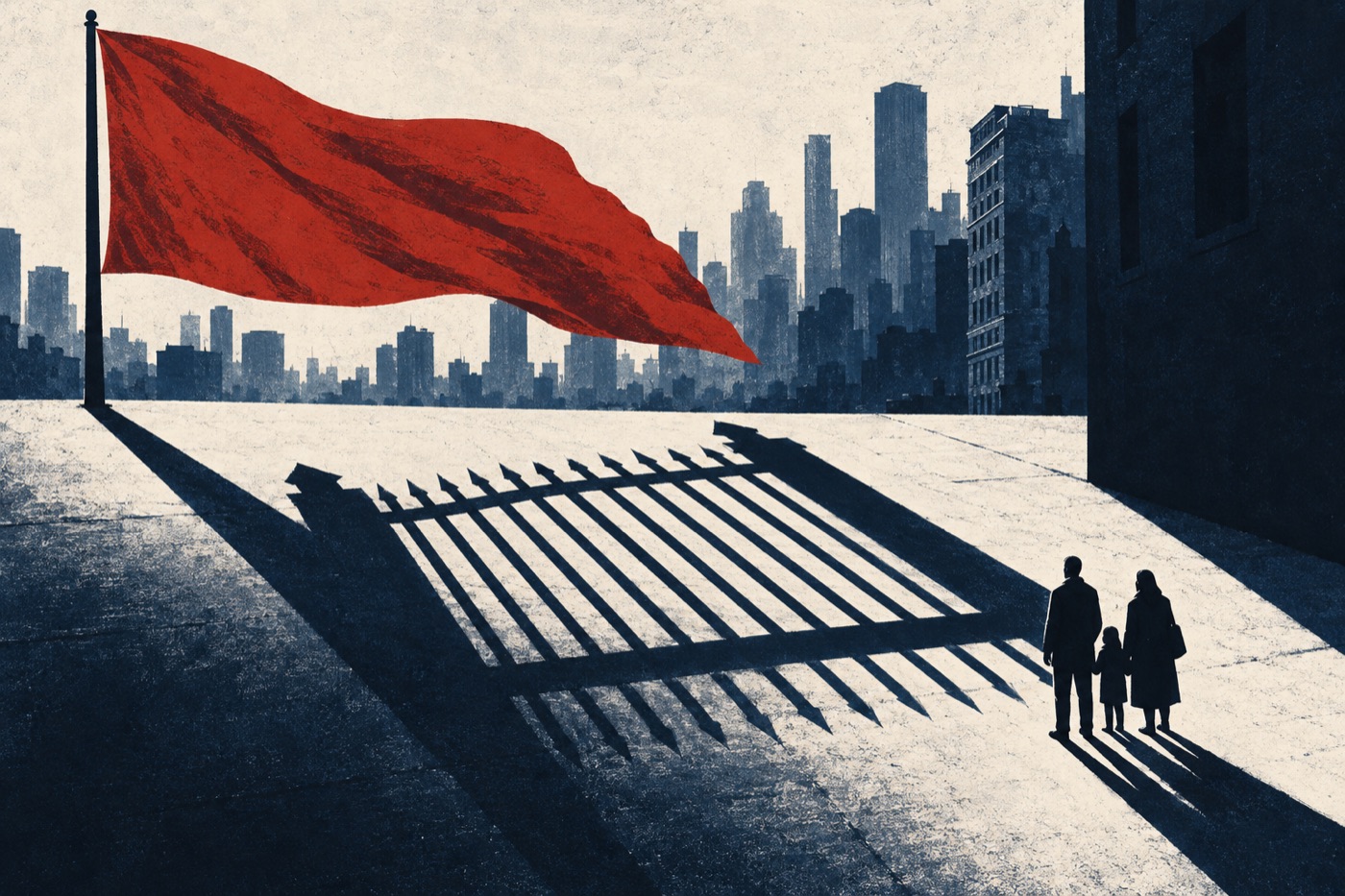
It is a strange kind of patriot who waves a flag while telling his neighbour he does not belong.
On Sunday, the ‘March for Australia’ flooded the streets of our cities. Its organisers claimed it was about jobs, housing, and culture.
But the chants told a different story. The speeches thundered a different truth.
This was never about policy. It was about purity.
Behind the banners about immigration pulsed an older, darker refrain: this country is only for some, not for all. Australians have heard these words before. A century ago, they were written into law under the White Australia policy.
It is a strange kind of patriot who waves a flag while telling his neighbour he does not belong.
Later, they were spat at Asian migrants in the 1980s and plastered across walls targeting minorities.
Each time, we thought the ghost had been buried. Each time, it returned, wearing a new uniform, carrying the same hate.
And this weekend, the uniform was unmistakeable. On the steps of the Victorian Parliament House, Thomas Sewell, the neo-Nazi leader of the National Socialist Network, boasted that his men had led the march.
In Sydney, Jack Eltis and his followers discarded pretence, announcing to the cameras that he is a neo-Nazi and “Yes, we are racist and proud. Send the ethnics back.”
There is no ambiguity left. The neo-Nazis told us exactly who they are and what they want, and some in the crowd cheered.
This was a public coronation of neo-Nazism in the daylight of an Australian Sunday. The steps of our parliament became a stage for Hitler’s heirs, in the heart of our democracy.
When Nazis hold the microphone, the mask is gone.
When racism marches in front, you cannot call it a fringe. It becomes the banner under which the rally moves.
The danger of Sunday’s march was not only that extremists attended. It was that they led.

They wrapped themselves in the flag, trying to disguise poison as patriotism.
They smuggled xenophobia into the square, dressed in the language of “heritage” and “way of life.”
And when marchers fell into step behind Hitler’s disciples, the line between fringe and normal blurred into nothing.
That blur is the true menace. Hate does not seize a nation overnight.
It seeps in slowly, drop by drop, until cruelty masquerades as common sense.
The Christchurch shooter, an Australian, did not wake one morning bent on slaughter. He was drip-fed for years on the “great replacement” lie, the very conspiracy theory shouted on our streets this weekend.
And while organisers insisted this was about immigration numbers, the effects were already plain.
Indian students in Brisbane stayed home. A Chinese nurse in Melbourne confessed she no longer felt safe walking through the CBD. Migrant-owned restaurants shuttered their doors out of fear.
That is not policy debate. That is intimidation, writ large across the lives of innocent people.
There is nothing “mainstream” about chanting alongside men who idolise Hitler in private and recruit in public.
There is nothing patriotic about terrorising the very migrants who built this country’s hospitals, businesses, and farms.
Australia’s greatness has never been found in purity. It has been found in plurality.
Every wave of newcomers—Greek, Italian, Lebanese, Vietnamese, Sudanese—expanded the idea of who gets to call themselves Australian.
That is our genius. That is our story.
So the real March for Australia did not happen on Sunday.
It is happening every day in classrooms where children of every faith share desks, in hospitals where migrant nurses cradle strangers, in neighbourhoods where families of every colour gather around barbecues.
That is the march worth defending.
The Australian flag does not belong to bigotry and exclusion.
It belongs to every child who has sung the anthem at school assembly, every new citizen who has sworn an oath, every community that has found a home here. To hand that flag to those who chant exclusion is to betray it.
The marchers claimed they were the voice of the nation. The answer must be immediate and unmistakeable: “You do not speak for us.”
Because if we yield the streets of Australia to their vision, even for a day, we are not simply allowing a protest.
We are rehearsing for something far darker.
And history has already shown us, with a brutality too sharp to ignore, where rehearsals of hate always lead.
First published in news.com.au, 1 September 2025.
Dr Dvir Abramovich is chairman of the Anti-Defamation Commission and the author of nine books. His latest publication is The Heart of Amos Oz: Love, War & Grief.