
Opinion
Your Kitchen. Your Fridge. Your Dead Children.
Put October 7 on an Australian street, with your children’s names, and the silence of the past three years becomes impossible to defend.
By Dvir Abramovich
Chairman, Anti-Defamation Commission
Listen to this column 9:00 · AI narration
6.30am. Footscray. Melbourne. A Saturday. What wakes you is not gunfire. It is engines. Motorbikes, utes, more than Barkly Street has ever held, and the sound does not fade. It stops outside.
6.31. Doors slam. Men are walking up driveways with rifles held low, the way you carry a tool you have used before. They are going house to house. They are in no hurry. They are in no hurry, because nobody is coming to stop them.
6.34. You are in the ensuite with your children. The lock sticks. One hand is flat against the door and you can feel your heartbeat in the wood. The other hand is over the mouth of your youngest. Through the plaster come the sounds from next door, the family with the trampoline, and you know what is happening to them.
6.36. Then nothing. And the nothing is worse. I am not asking you to imagine this. I am moving it. I am taking the morning of October 7, 2023, when Hamas terrorists invaded Israel, and putting it on your street, with your children’s names, because too many of our elected leaders, institutions and loudest voices have spent three years looking away from it.
On October 7, Hamas murdered about 1,200 people in Israel and dragged 251 into Gaza. Israel has 10 million people; we have nearly 28 million. Scale it up and 3,360 of us are dead and 702 kidnapped. In one morning.
They think nobody is coming. Prove them wrong.Dvir Abramovich
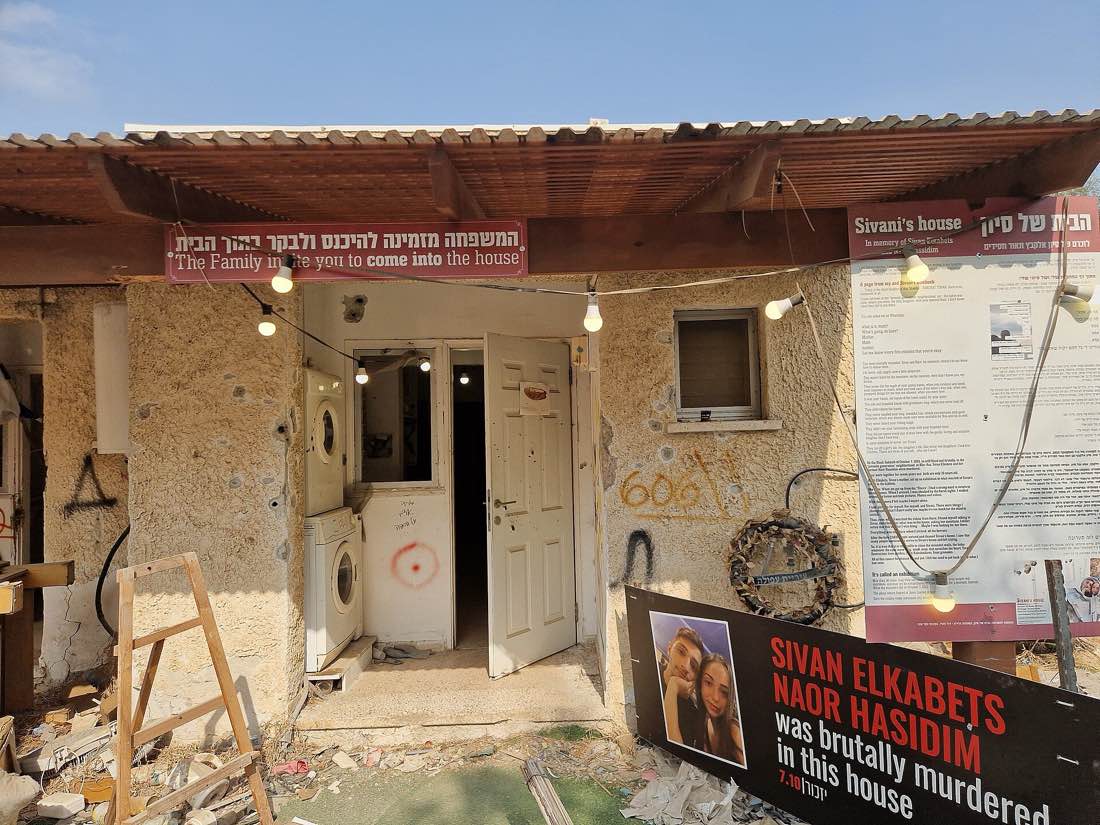
Let me walk you through the houses and tell you who they are here. Galit Carbone was 61, a librarian and grandmother, born in Sydney. At 12.09pm she had been in her safe room at Kibbutz Be’eri for nearly six hours. She rang her brother Danny and whispered: ‘I hear them. They’re here. I can’t remember if I locked the door.’ Then her daughter Nicole was on the line. ‘Listen,’ Galit said. ‘They’re here for me.’ And then two words, said one last time: ‘My sunshine.’ She hung up herself. Four shots, her family was told. Two in the back. That is a grandmother in a locked bathroom on Church Street, Parramatta, Sydney, whispering a pet name to her daughter in Westmead, and then the line going dead.
At Kibbutz Kfar Aza, Aviv and Livnat Kutz and their three children, aged 14 to 18, went into their safe room at the first siren and held each other on the bed. They were shot like that, as they hugged, Aviv on top, his arms around them. That is a family of five in a bedroom in Sunshine, Melbourne.
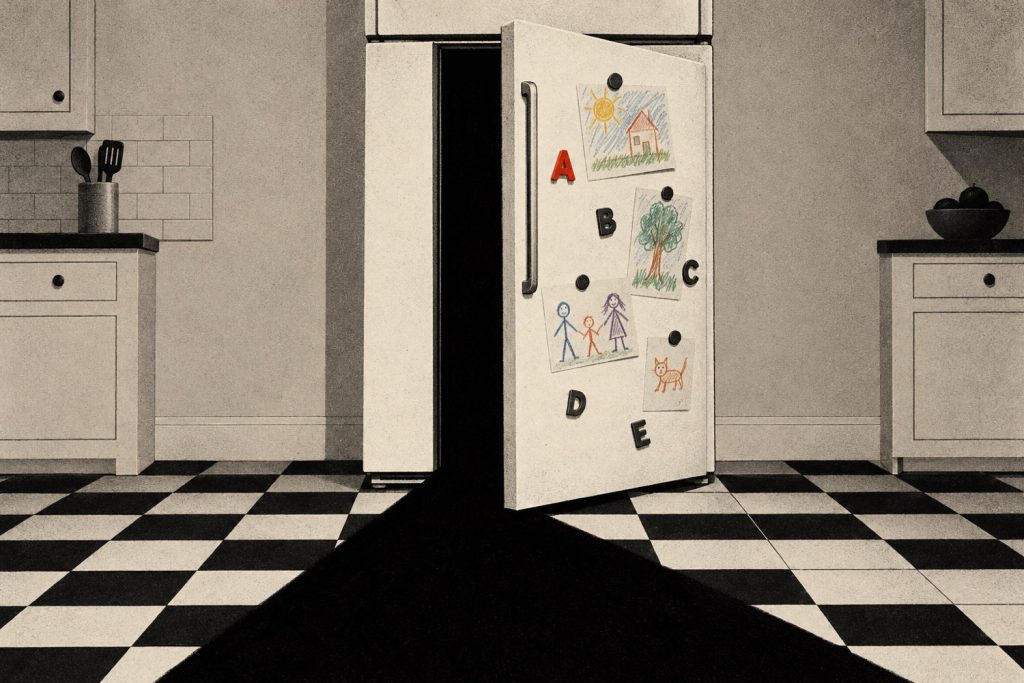
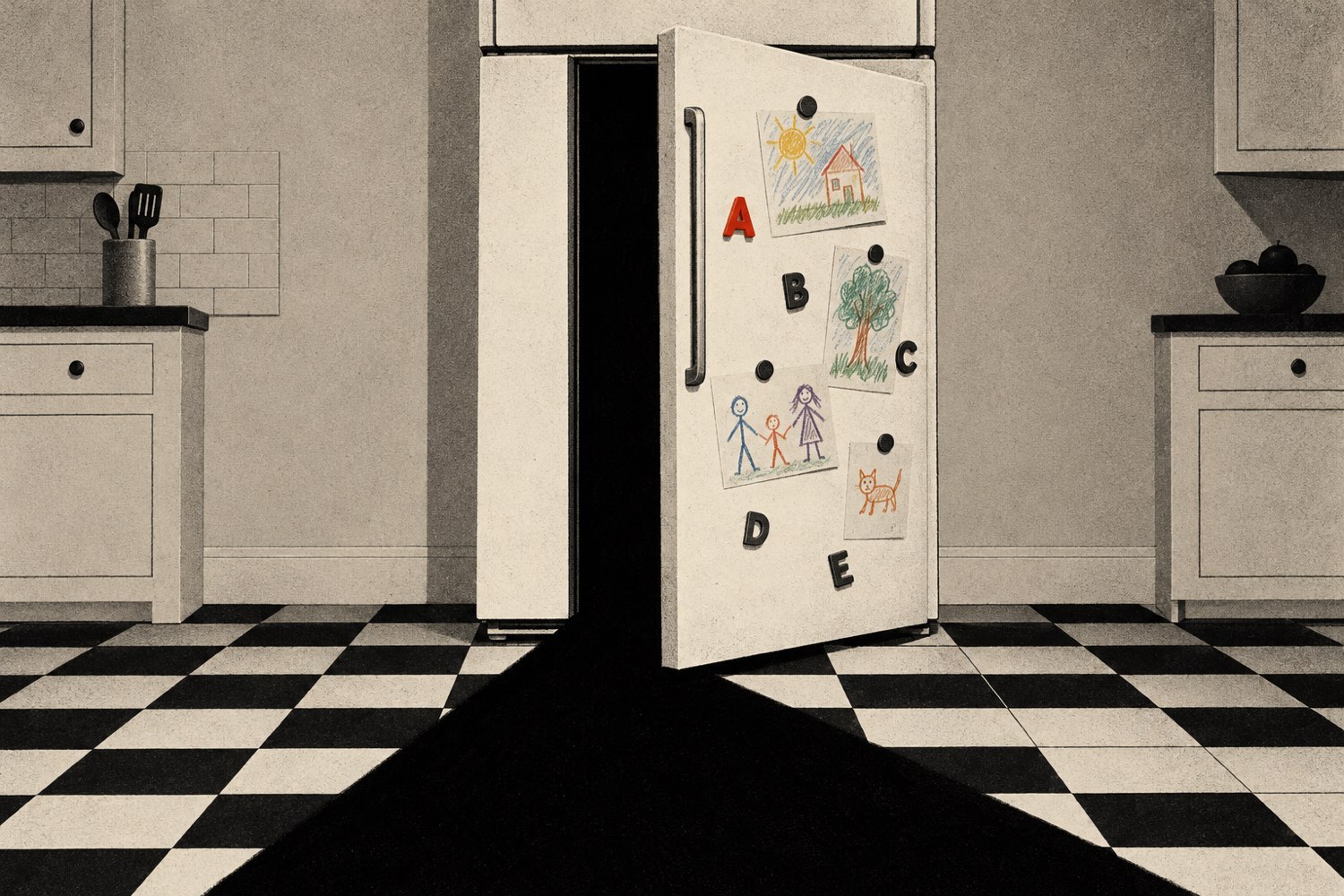
At Netiv HaAsara, a cooperative settlement, a firefighter named Gil Taasa threw himself on a grenade to save his two sons. A gunman walked the wounded boys into the kitchen, took a soft drink from the fridge, and left. One boy lost an eye. The other asked, ‘Why am I still alive?’ That is your kitchen in Seven Hills, Sydney. That is your fridge.
At Kibbutz Kissufim, the attackers shouted ‘IDF, IDF’ so people would unlock their doors. A woman of 90 was dragged from her safe room into her living room and shot in the head. In the city of Sderot a minibus of pensioners, some of them Holocaust survivors, stopped with a flat tyre. The shelter would not open. Thirteen were shot dead beside the bus and lay there for 10 hours. That is the seniors’ outing from a Maribyrnong bowls club in Melbourne’s west, dying on a footpath in Footscray.
A young Israeli, Mor Bayder, learned her grandmother was dead when her aunt rang screaming, ‘Open Facebook’. The killer had filmed her grandmother dead on her own floor and posted it to her grandmother’s Facebook page. ‘That’s how we received the news.’ That is your nan’s Facebook page.
Dr Chen Kugel runs Israel’s forensic institute. Three thousand three hundred and sixty body bags came through his doors, most holding parts and burned bones. He knows people were burned alive ‘because there is soot in their trachea, in their throats’. He saw a safe room doused with accelerant ‘so that it would become a crematorium’. The United Nations’ own investigator found ‘reasonable grounds to believe’ women were raped and gang-raped at the Nova music festival, and ‘clear and convincing information’ that hostages were raped and tortured in Gaza. A nurse who hid in a caravan at the festival, Tali Biner, put it in five words: ‘Rape has one sound.’
And in the tunnels, for two years, Israel’s Health Ministry reported to the UN that freed hostages were chained, starved of up to 15 kilograms, and that a child was branded with a heated object. Ariel Bibas was four and his brother Kfir was nine months old. Israel’s forensic examiners found no sign of a bombing; the army said they were killed ‘with the bare hands of the evil men’. Their father, Yarden, held separately, heard this from his captors: ‘You’ll get a new wife. Get new kids. Better wife. Better kids.’ That is the two little boys from the kinder on Geelong Road, Footscray, and their father in a hole under Footscray Park being told to get better ones.
Now look at the one Jewish family you know. What came next happened to them, here, and they have never told you. That Saturday the rest of the country watched the news. Your Jewish neighbours were on the phone their relatives and friends in Israel, waiting for somebody to pick up. In Melbourne, a woman named Keren, who grew up in Kfar Aza, sat on her couch and shook while her wedding album was turned, name by name, into a list of the murdered and the kidnapped. An Australian, Melissa, learned that three of her relatives had been slaughtered and seven were in Gaza.
Then came the second wound. Sunday evening, day two, with the dead not yet buried, a sheikh at Lakemba in Sydney told a cheering crowd: ‘I’m elated … This is the day we’ve been waiting for.’
Then the lie arrived. At Sydney University, in August 2024, students voted down a motion condemning the massacre while others shouted ‘We don’t care’. A former Australian of the Year, Grace Tame, asked on ABC radio in March about the Israeli women raped and murdered by Hamas, replied: ‘I’m not going to sink to the level of entertaining any kind of propaganda’. Then: ‘Those things have been debunked.’ Six months later she said she did not deny ‘the legitimate accusations of rape made by individual Israeli women’, while still calling the mass rapes unproven.
By last year fewer than half of Australians polled would even call it ‘broadly true’ that Hamas had killed around 1,200 Israelis. Here is what that lie sounds like when it reaches Jewish children. A principal in Maroubra, Sydney, told the Royal Commission: ‘You walk past our school and it looks a lot more like a prison than a primary school.’ A PhD student had four classmates give him the Nazi salute: ‘It feels like they want to kill me.’ A young woman from the ANU in Canberra described hiding her own name, day after day: ‘exhausting’. A mother told the Commission she will not put a mezuzah on her door ‘until all the tradies don’t need to come in anymore, because it feels vulnerable and exposing and scary’.
And the people paid to protect them? The vice-chancellor of Sydney University admitted to the Royal Commission that ‘our Jewish students and staff paid a price’. On this year’s anniversary, the Premier of Victoria told the students of Melbourne’s Mount Scopus College: ‘We did not do enough to help you.’ He was three years late.
I am asked, again and again, by people who have lived their whole lives here, the same question: is it time to leave for Israel?
I am angry. Not the anger of a debate. The anger of knowing that a baby was killed by hand, that a child was branded like livestock, and that the family you know now leaves the mezuzah off the door while the man who was ‘elated’ kept his pulpit and the woman who said ‘debunked’ kept her microphone.
Three years ago, this month, a grandmother born in Sydney whispered ‘my sunshine’ into a phone, and nobody stood between her and the men at the door. The men are not at your door, Australians. But the people who mourn her are, and they are asking me when it is time to go.
So, hear me, because I will not say it politely. There are Jewish families in Melbourne’s Caulfield and Sydney’s Bondi tonight with a suitcase in the hall. Not for a holiday. For the day they decide this country has made its choice. That is the ending that the people who cheered on day two want, and the people who looked away are letting them have.
You cannot un-shoot Galit Carbone. You cannot un-shoot the Kutz children in their beds. But you can decide, today, whether the family down the road unpacks that suitcase or zips it shut. They think nobody is coming. Prove them wrong. Knock on that door before the removalist’s truck does.
First published in The Jewish Report, 27 October 2026.
Dr Dvir Abramovich is chairman of the Anti-Defamation Commission and the author of nine books. His latest publication is The Heart of Amos Oz: Love, War & Grief.